Freedom Requires Structure
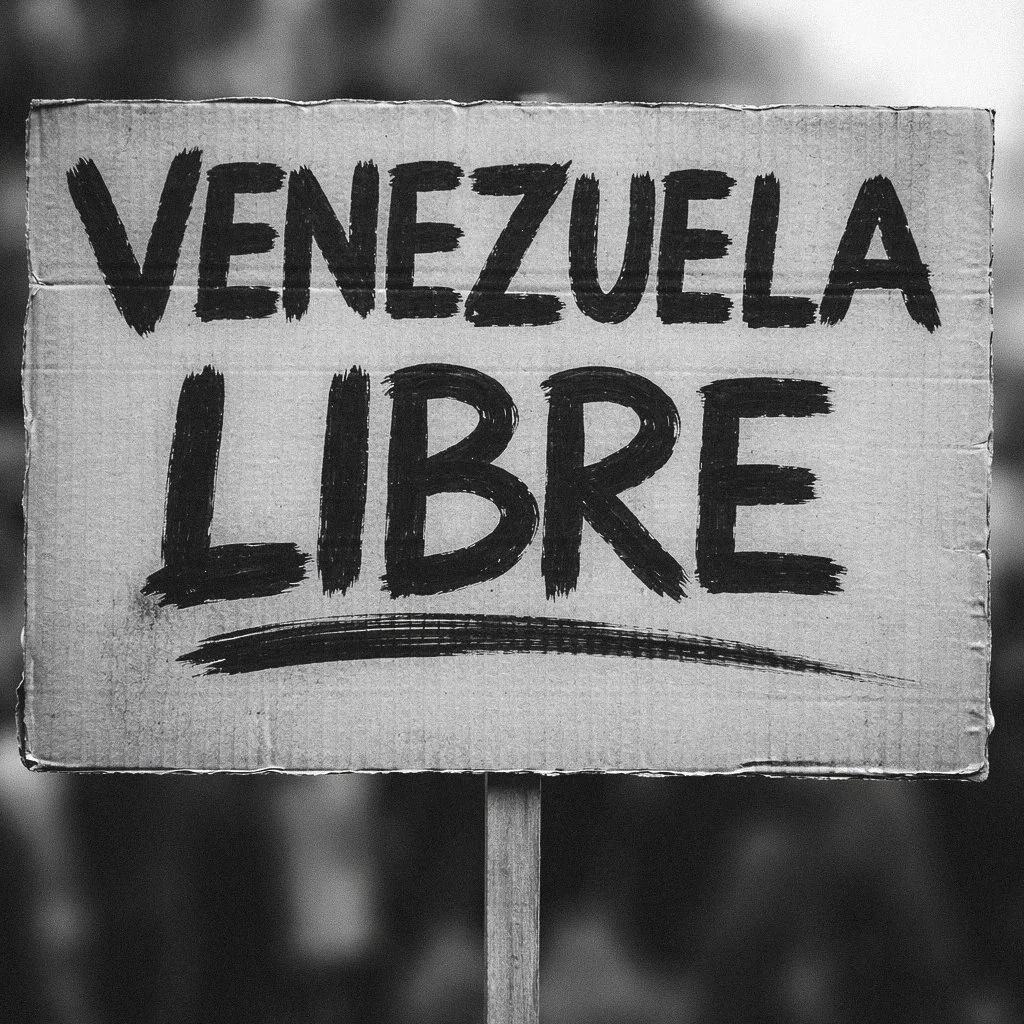
On January 3, 2026, in one of the most consequential interventions in Latin America in decades, United States military forces entered Venezuelan territory and detained President Nicolás Maduro, transporting him to the United States to face federal criminal charges that had been pending for years. American officials described the operation as both legally justified and morally necessary. In the days that followed, public statements emphasized not only accountability but liberation. With the removal of the regime, it was suggested, Venezuela could finally become free.
That claim rests on a familiar assumption: that freedom emerges naturally once authority is removed. Dismantle the governing structure, eliminate the rules, dissolve the institutions, and liberty will occupy the space left behind. The idea is intuitively appealing, particularly in political cultures shaped by deep skepticism toward centralized power. Yet it reflects a fundamental misunderstanding of how freedom actually functions. History does not show liberty flourishing in institutional vacuums. It shows power reorganizing, often rapidly, while ordinary people become more exposed rather than less.
Freedom is often described as the absence of restraint. The fewer rules one lives under, the freer one must be. But restraint and domination are not the same thing. Rules that limit arbitrary force are not the enemy of freedom. They are its precondition. Without shared systems capable of constraining power, interference does not disappear. It becomes unpredictable. Authority does not dissolve. It fragments, concentrates, or externalizes, frequently in forms far more coercive than the systems that preceded it.
This distinction matters because freedom is not merely the absence of command. It is protection from arbitrariness. A society without enforceable rules does not eliminate interference. It eliminates protection from it. Contracts lose meaning. Property is secured by force rather than law. Disputes are resolved through intimidation rather than adjudication. Under such conditions, freedom becomes contingent, dependent on strength, proximity to power, or the willingness to submit. That is not liberty. It is exposure.
The collapse of a governing system does not produce independence. It produces dependency. When public structures disappear, people do not become autonomous actors. They become reliant on whoever can provide security, resources, or stability, whether that power takes the form of militias, corporations, foreign governments, or local strongmen. Public dependency is replaced by private dependency, often harsher, less accountable, and more coercive. Freedom narrows as survival displaces agency.
This dynamic is frequently misunderstood in discussions of negative freedom. Freedom from interference is mistaken for freedom from structure. But interference does not require formal authority. It requires only power. When systems capable of restraining power collapse, interference becomes more frequent rather than less. It simply changes its source. Negative freedom, properly understood, depends on institutions that prevent domination, not on the fantasy that domination disappears when rules are removed.
Positive freedom, the capacity to act meaningfully in the world, is constrained in similar ways. Agency requires predictability. Planning requires stability. Choice requires a baseline of safety. In environments governed by uncertainty and fear, human energy is consumed by survival. Long-term agency becomes impossible. Even when no one is issuing explicit commands, freedom erodes as horizons shrink.
This is why the language of liberation so often fails to describe the lived reality that follows political collapse. The removal of a government does not guarantee freedom any more than the removal of traffic laws guarantees mobility. What matters is not whether rules exist, but what they restrain. Systems that limit individuals while leaving power unchecked undermine freedom. Systems that restrain power itself make freedom possible.
None of this is an argument for blind trust in institutions. Systems can be corrupt, captured, or abusive. History offers ample evidence of that. But the failure of a system does not invalidate the necessity of systems altogether. It clarifies the criteria by which they should be judged. The question is not whether rules exist, but whether they reduce arbitrariness, limit domination, and allow ordinary people to live without constant fear.
Freedom does not emerge from disorder. It emerges from structure that is accountable, predictable, and oriented toward restraining power rather than concentrating it. When that distinction is lost, collapse is mistaken for liberation, and exposure is mistaken for autonomy. The result is not freedom but a redistribution of power, often toward those least constrained by law and least accountable to the people whose lives they shape.