Composition Rules Were Never Instructions
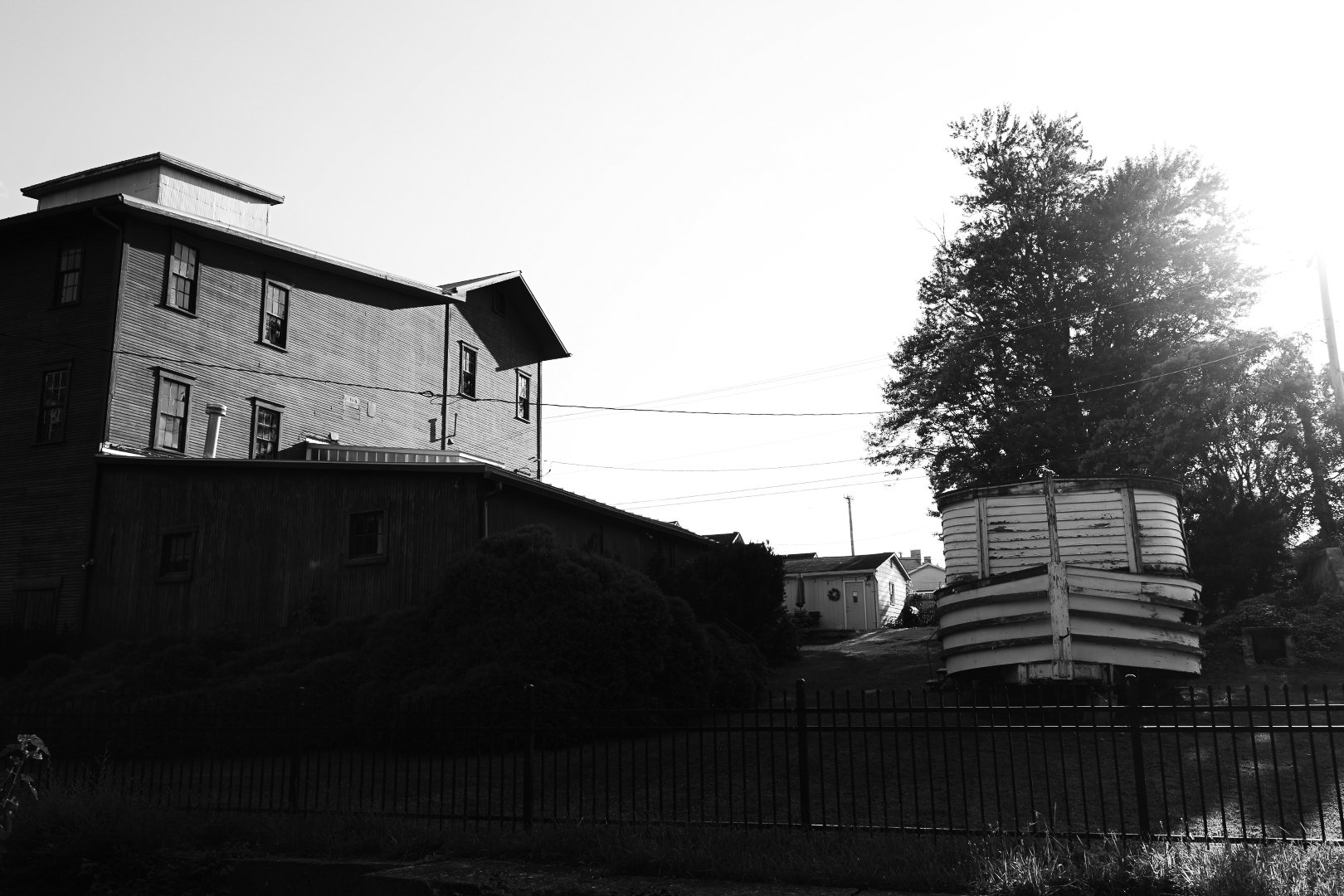
Brian Mahaney, untitled, digital photograph, 2026
Composition is taught as a set of instructions. Fill the frame. Find the subject. Watch the light. Learn the rule of thirds, and place the horizon somewhere other than the center. Master these first, students are told, and only later decide when it's acceptable to set them aside.
The instruction implies an order: rule, then judgment. Know the principle before you're permitted to depart from it.
But look closely at almost any photograph widely admired for its composition, and the rule explains remarkably little about why the image actually works. Henri Cartier-Bresson's most celebrated frames are routinely described afterward in the language of geometry: a diagonal here, a shape answered there, vocabulary supplied by critics studying a finished print, not instructions consulted with the shutter half-pressed. Garry Winogrand, asked once why he photographed, is remembered for saying he did it to find out what something would look like photographed. There is no rule inside that answer.
None of this makes the rules false. A beginner who ignores the instruction to fill the frame does not usually produce a bold, exception-proving photograph. They produce an empty one. The rule is doing real work at that stage. It simply isn't the work most photography education claims it's doing.
That's the assumption most composition teaching rests on: the rule as prerequisite, learned first, earned past later.
It doesn't survive an obvious question. Where does a rule come from in the first place?
A rule can only be checked against a photograph that already exists. Rule of thirds, leading lines, frame-filling: every one of these is a description applied after someone has already decided an image was worth keeping. No rule tells a person standing in front of a scene which of the hundred available arrangements will hold together and which will collapse. That decision happens first, felt rather than reasoned, and the rule arrives afterward as the vocabulary available for explaining a choice that had already been made. The instruction was never upstream of the photograph. It was downstream of it the entire time, describing what a trained eye had already decided before any rule was consulted.
This isn't unique to photography. Chess researchers have known for decades that strong players can glance at a board for a few seconds and recognize a promising position before they could explain why. The phenomenon is usually called chunking: years of study compress openings, tactics, and patterns into something the eye reads almost as a single shape, too quickly for conscious rule-following to keep pace with it. A grandmaster in that moment isn't running through a mental checklist. The checklist was real once. It got folded, years earlier, into something closer to recognition than to reasoning, and what's left by the time it matters looks nothing like the rule it came from.
Composition seems to work the same way. Someone who has spent years being told to fill the frame, watch the light, find the subject, eventually stops consulting that list and starts simply seeing which arrangements hold together. The rule doesn't vanish. It gets compressed into something faster than itself, something that finishes its work before language is available to describe what it did.
I did not arrive at this by reasoning it through. I arrived at it by making a photograph and then failing, for the better part of a week, to understand why it worked.
The photograph is of a roller mill on a hill and an old canal boat sitting across from it, both raised above where I was standing. Neither the mill nor the boat is the subject of the image. The only choice I actually made, standing there, was where to point the camera, wide enough to keep both of them in the frame rather than isolating either one, which would have produced a single, easier, and considerably more boring photograph. Instead something happens between the two structures that neither produces alone: the mill rises above me at an angle that makes it loom, the boat sits nearly square in front of me and reads flat and plain, and a few power lines are the only thing physically crossing the bright, empty gap between them. Pull any one piece out (the height, the light, either structure, the emptiness) and whatever the photograph is doing collapses with it.
I made that decision the moment I first saw the scene, not after walking it or searching for a better arrangement. And I did not realize, standing there, that I had done this before. Months earlier, outside a different building entirely, I had photographed a house with a lawnmower left on the porch mid-task, power lines and a shed further back. The porch orderly, the shed and wires behind it in no order at all. The same combination, composed on a first look, long before I had language for what it was doing.
None of the rules I actually know told me to look for that gap, in either photograph. They didn't have to. I only needed them afterward, to explain to myself why the combination was doing something. Whatever taught me to notice it in the first place wasn't a rule I could point to. It was practice with rules I had already put down and forgotten I was still using. Which is a strange thing to discover about your own eye: that it can be several steps ahead of your own theory of it, quietly building something you don't have a name for yet.
A composition rule doesn't make a photograph work. It only names, afterward, a decision the eye had already made. Named in language simple enough to hand to a beginner who can't yet make that decision alone. The naming came second. The seeing came first. It always does.