What Makes a Photo Feel Meaningful?
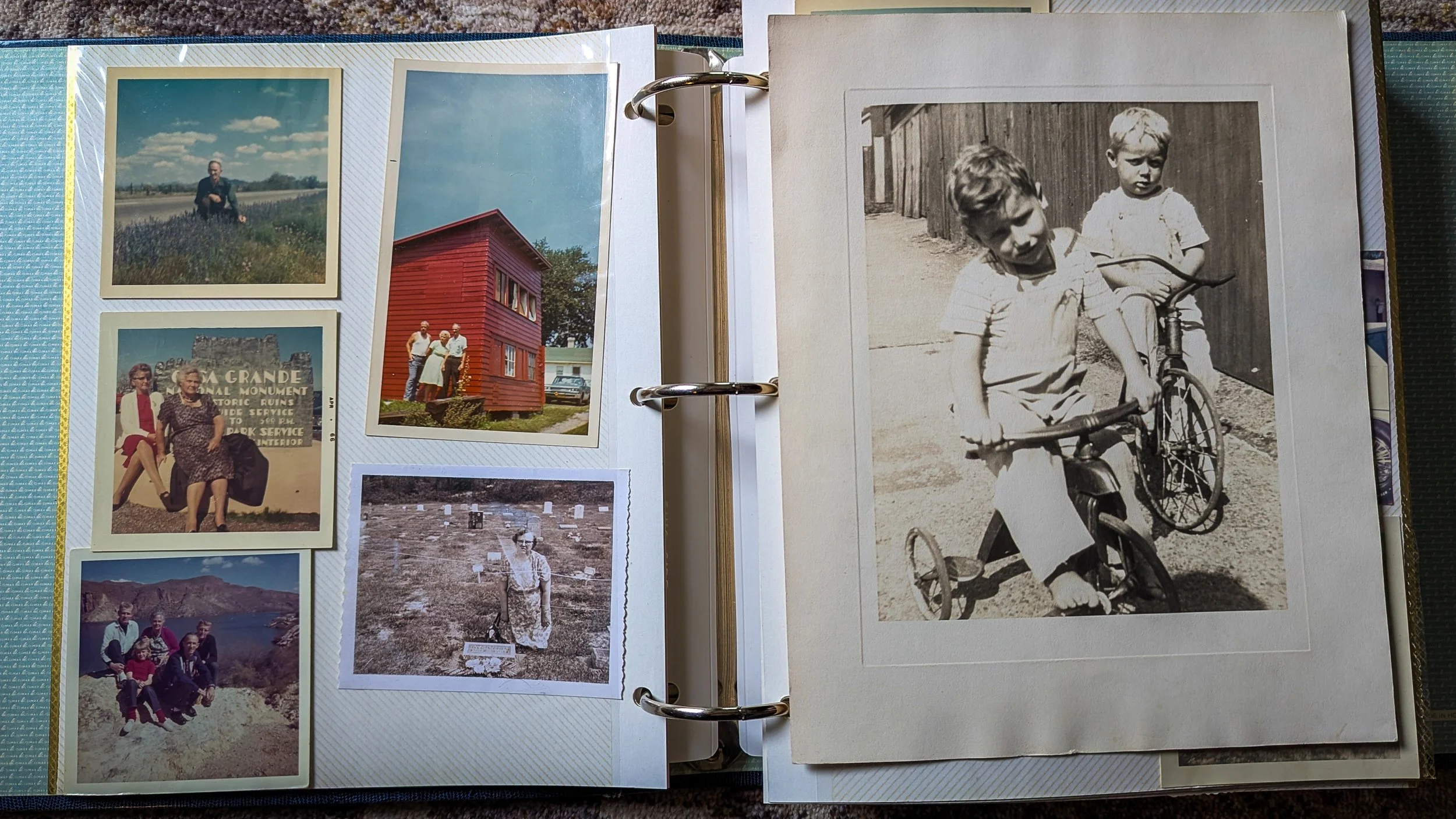
Old family photographs rarely survive because of technical quality. Focus drifts. Exposure varies from frame to frame. Colors shift over time into something less accurate than whatever was originally in front of the camera. None of those flaws seem to weaken their hold.
The images persist because they attached themselves to memory before anyone learned how to evaluate them. They were never approached as photographs in the formal sense. Nobody studied the composition. Nobody zoomed in looking for sharpness. The pictures existed as fragments of lived experience, revisited often enough that their imperfections became inseparable from the moments themselves.
That process shapes the way photographs are understood long before technical language enters the picture. Albums are opened and closed over years without analysis. Prints are handled until the edges soften. Certain images remain easy to recall even when the details inside them are objectively poor. What survives is not precision, but recognition.
The photographs themselves are uneven. Faces drift slightly out of focus. Light falls inconsistently across a room. Colors shift in ways that would be corrected immediately today. Nothing about them suggests control. They were made quickly, often in passing, by people who were not thinking about photography at all.
Still, those images hold.
Not as technical references, but as something closer to memory. They carry a kind of internal coherence that does not depend on accuracy. The photograph does not need to reproduce the moment precisely to remain recognizable. In some cases, precision would work against it. Memory does not retain scenes in a resolved form. It compresses them, distorts them, allows certain elements to dominate while others fall away.
The images in those albums behave the same way. They are not corrected back to an ideal. They remain in the condition they were made, and over time that condition becomes inseparable from the moment itself.
Later, when photography becomes intentional, the priorities change. The process becomes controlled. The variables that once passed unnoticed are now isolated and managed. Exposure is balanced. Focus is secured. Composition is adjusted until it aligns with established conventions. The photograph is shaped toward an expected standard.
The result is stable. Clean. Predictable in how it will be received.
That stability has an effect.
When an image resolves every variable, it leaves little for the viewer to negotiate. The frame is complete. Nothing resists interpretation. Attention moves through it quickly because there is no interruption in the process.
Images that deviate slightly behave differently. A small shift in exposure, a misalignment in framing, a softness at the edge of the subject. None of these are dominant, but they introduce a form of instability. The image does not close as quickly. It holds the viewer in place a little longer.
That delay matters.
Attention tends to persist where something remains unresolved. Not in a dramatic sense, but in a subtle one. The eye returns. The frame is scanned again. The photograph continues to operate after the initial read.
This is not the same as error.
An uncontrolled image collapses. Too much deviation and the structure breaks down. The subject disappears. The frame loses coherence. On the other side, an image that is fully controlled can become inert. Every element is resolved, and nothing pushes back against the viewer.
Between those two conditions is a narrower range where the image remains intact but does not fully settle. The structure holds, but some part of it resists closure. That resistance creates a kind of internal tension.
Working in that range requires a different orientation. Instead of removing every inconsistency, the photographer has to decide which ones remain. Not as accidents, but as components of the image.
The decision is not arbitrary. It emerges through repetition. An image is pushed too far and falls apart. Another is corrected too aggressively and loses presence. Over time, a boundary begins to take shape. Not as a rule, but as a felt threshold where the image begins to sustain attention.
This is where imperfection shifts from defect to variable.
The same characteristic can function in two ways. Unmanaged, it weakens the image. Integrated deliberately, it can define it. The difference is not in the characteristic itself, but in how it interacts with the rest of the frame.
The pattern is visible outside photography as well. In sound, feedback can interrupt or it can structure the experience, depending on how it is controlled. The underlying phenomenon does not change. Its role does.
Photography operates with the same constraint.
A technically resolved image represents one endpoint. Everything is aligned with the standard. The frame is complete. There is no ambiguity in how it should be read.
Another version of the same image may retain a degree of instability. Not enough to lose structure, but enough to prevent immediate resolution. That version remains active. It continues to engage the viewer after the first pass.
The two are not interchangeable.
Returning to older photographs makes this easier to recognize. They do not conform to current expectations. They were never intended to. Yet they continue to function because they align with how experience is actually retained. The imperfections are not separate from the memory. They are part of how the memory is held.
That alignment forms the baseline through which most images are interpreted, even when viewers cannot articulate it.
From there, evaluation shifts.
The question is no longer whether an image meets a technical standard. It becomes a question of interaction. Which elements sustain attention, and which close the image too quickly. Which variations support the structure, and which weaken it.
The answer is specific to each frame. It cannot be reduced to a formula or extracted from settings alone. It depends on the internal relationships within the image itself.
There is always a version of a photograph that is technically complete.
There is also a version that continues to operate after it is seen.
They are not the same.